
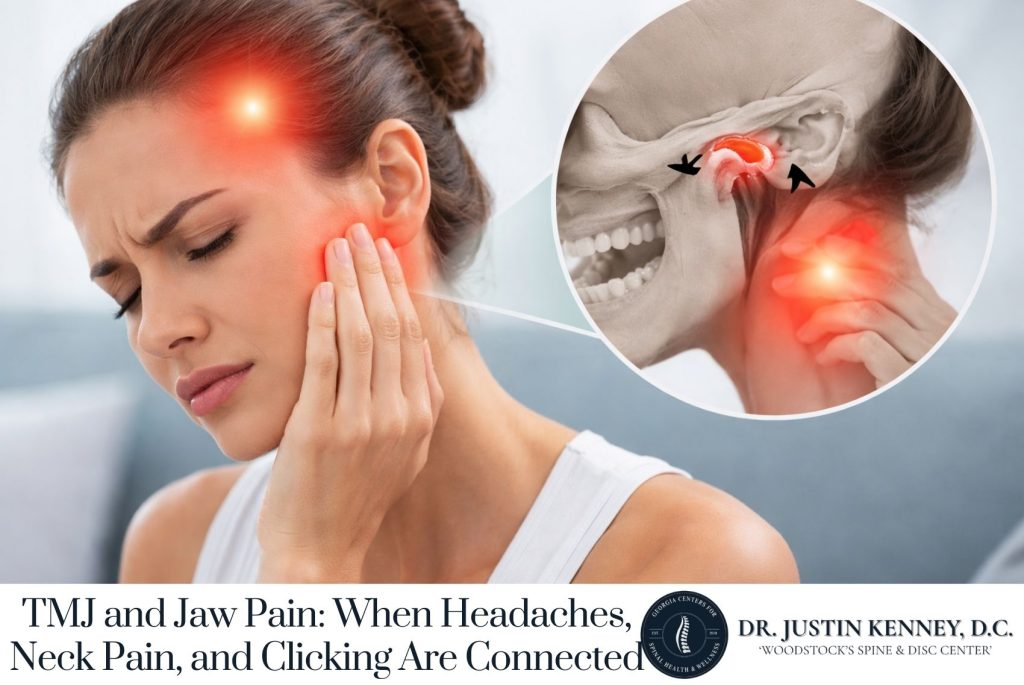
Jaw pain can be frustrating. But when it’s accompanied by headaches, neck stiffness, ear discomfort, or a persistent clicking sound when you chew or speak, the issue may be more complex than you realize.
At Georgia Centers for Spinal Health & Wellness, we regularly help patients uncover the connection between temporomandibular joint (TMJ) dysfunction and seemingly unrelated symptoms like migraines and chronic neck pain. If you’ve been treating the symptoms without lasting relief, it may be time to look at the root cause.
Let’s explore how TMJ disorders develop, why they create widespread discomfort, and what you can do about it.
What Is TMJ?
The temporomandibular joints (TMJ) are the small but powerful joints that connect your jawbone to your skull. You have one on each side of your face, located just in front of your ears. These joints allow you to:
- Chew
- Speak
- Yawn
- Smile
- Move your jaw up, down, and side to side
Because the TMJ is used constantly throughout the day, it is highly susceptible to strain and dysfunction.
When something disrupts the normal movement of these joints, it can lead to TMD (temporomandibular disorder) — a condition that affects not only the jaw but often the head, neck, and shoulders as well.
The Surprising Connection: Jaw, Head, and Neck
Many patients are surprised to learn that their headaches or neck pain may actually stem from jaw dysfunction.
Here’s why:
1. Shared Muscles and Nerve Pathways
The muscles that control jaw movement are closely linked to the muscles of the head and neck. When the jaw is misaligned or inflamed, surrounding muscles compensate — leading to tension headaches, facial pain, and neck stiffness.
2. Trigeminal Nerve Involvement
The trigeminal nerve, one of the largest nerves in the head, plays a major role in facial sensation and jaw movement. TMJ dysfunction can irritate this nerve, contributing to:
- Migraines
- Facial pain
- Ear discomfort
- Pressure behind the eyes
3. Postural Imbalance
Poor posture — especially forward head posture from prolonged computer or phone use — alters jaw positioning. Over time, this misalignment increases strain on the TMJ and cervical spine, creating a cycle of pain.
Common Symptoms of TMJ Disorder
TMJ symptoms vary widely. You may experience:
- Jaw pain or tenderness
- Clicking, popping, or grinding sounds
- Locking of the jaw
- Difficulty chewing
- Frequent headaches or migraines
- Neck and shoulder pain
- Ear fullness or ringing (tinnitus)
- Facial muscle fatigue
- Dizziness
If you recognize several of these symptoms, a comprehensive evaluation may help determine whether TMJ dysfunction is contributing to your discomfort.
What Causes TMJ Dysfunction?
TMJ disorders can develop from several factors, including:
- Teeth grinding or clenching (bruxism)
- Stress-related jaw tension
- Trauma or injury
- Arthritis
- Poor posture
- Bite misalignment
- Cervical spine misalignment
Often, it’s not a single cause but a combination of structural imbalance and muscular tension.
How Spinal Health Affects TMJ
At Georgia Centers for Spinal Health & Wellness, we understand that the jaw does not function in isolation. The alignment of the cervical spine (neck) plays a significant role in TMJ health.
When the upper cervical spine is misaligned, it can:
- Change jaw mechanics
- Increase muscular tension
- Irritate nerves
- Worsen headache frequency
By addressing spinal alignment, muscle tension, and posture, many patients experience relief not just in their jaw — but in their headaches and neck pain as well.
Treatment Options for TMJ and Jaw Pain
Treatment depends on the underlying cause and severity of your symptoms. A comprehensive approach may include:
- Spinal and cervical adjustments
- Myofascial release therapy
- Postural correction strategies
- Therapeutic exercises
- Stress-reduction techniques
- Collaboration with dental professionals when necessary
The goal is to reduce inflammation, restore balance, and relieve nerve irritation — not just mask the symptoms.
Comprehensive TMJ Q&A Section
Q: How do I know if my headaches are related to TMJ?
If your headaches occur alongside jaw pain, clicking, facial tension, or neck stiffness, TMJ dysfunction may be involved. Headaches that start near the temples or behind the eyes are particularly common with TMD.
Q: Is jaw clicking always a problem?
Not necessarily. Some people have painless clicking without dysfunction. However, if clicking is accompanied by pain, locking, or limited jaw movement, it should be evaluated.
Q: Can TMJ cause ear pain or ringing?
Yes. Because the TMJ is located close to the ear canal and shares nerve pathways, TMJ dysfunction can create ear pressure, ringing (tinnitus), or even dizziness.
Q: Does stress make TMJ worse?
Absolutely. Stress often leads to jaw clenching or teeth grinding, especially at night. Over time, this puts significant strain on the temporomandibular joint.
Q: Can neck problems cause jaw pain?
Yes. The jaw and upper cervical spine are biomechanically connected. Misalignment in the neck can alter jaw mechanics and increase muscle tension.
Q: Is TMJ permanent?
Not in most cases. With proper diagnosis and targeted care, many patients experience significant improvement or full resolution of symptoms.
Q: When should I seek professional help?
If your symptoms persist for more than a few weeks, interfere with daily activities, or include locking of the jaw, it’s time for a professional evaluation.
Q: Can chiropractic care help TMJ?
Chiropractic and spinal care can help improve cervical alignment, reduce muscle tension, and relieve nerve irritation that contributes to TMJ symptoms.
Q: What happens during a TMJ evaluation?
A thorough evaluation may include:
- Jaw range-of-motion testing
- Cervical spine assessment
- Postural analysis
- Muscle palpation
- Review of symptoms and history
This comprehensive approach helps identify the root cause rather than just treating the symptoms.
Don’t Ignore the Signs
Jaw clicking, chronic headaches, and neck pain are often connected. Treating one area without evaluating the others may only provide temporary relief.
If you’re ready to uncover the true source of your discomfort, our team is here to help.
Contact Georgia Centers for Spinal Health & Wellness
Georgia Centers for Spinal Health & Wellness
99 Weatherstone Dr. Suite 940
Woodstock, GA 30188
Phone: (678) 388-7670


