
Georgia Centers for Spinal Health & Wellness – Woodstock, GA
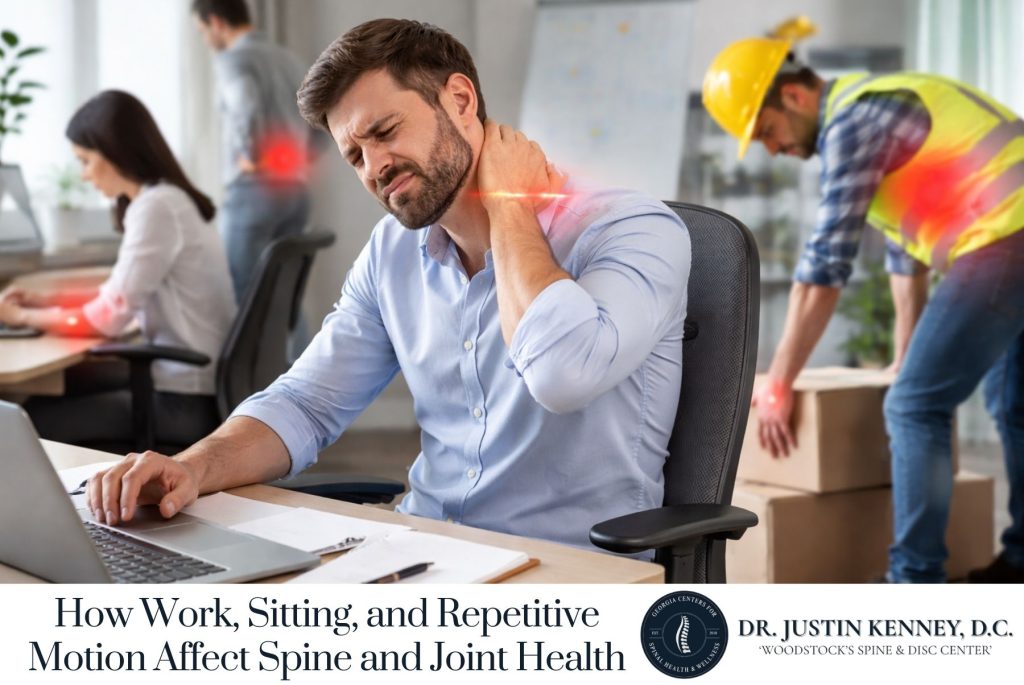
In today’s modern world, many jobs require long hours at a desk, repetitive movements, or physically demanding tasks. Whether you work in an office, on a construction site, in healthcare, or in retail, your daily routine can significantly impact your spine and joint health.
At Georgia Centers for Spinal Health & Wellness, we frequently see patients struggling with neck pain, back pain, joint stiffness, and repetitive strain injuries directly related to their work environment and daily habits. Understanding how work, sitting, and repetitive motion affect your body is the first step toward prevention and long-term relief.
The Impact of Prolonged Sitting on the Spine
Many people don’t realize that sitting for extended periods can be just as stressful on the body as physically demanding labor.
1. Increased Pressure on Spinal Discs
When you sit—especially with poor posture—your spinal discs experience increased pressure. Slouching forward or leaning into a computer screen shifts the natural curve of your spine, placing strain on:
- The cervical spine (neck)
- The thoracic spine (mid-back)
- The lumbar spine (lower back)
Over time, this can contribute to disc degeneration, herniated discs, and chronic lower back pain.
2. Forward Head Posture (“Tech Neck”)
Looking down at screens for hours causes the head to shift forward. For every inch your head moves forward, the weight on your spine increases dramatically. This can lead to:
- Neck stiffness
- Headaches
- Shoulder tension
- Nerve irritation
3. Tight Hips and Weak Core Muscles
Prolonged sitting shortens hip flexor muscles and weakens core muscles. This imbalance often results in:
- Lower back pain
- Pelvic misalignment
- Reduced spinal stability
Repetitive Motion and Joint Stress
Repetitive movements—whether typing, lifting, bending, or twisting—can gradually strain muscles, tendons, and joints.
Common Repetitive Motion Injuries:
- Carpal tunnel syndrome
- Tendonitis
- Rotator cuff injuries
- Sciatica
- Bursitis
Even small movements repeated thousands of times per day can cause inflammation and tissue breakdown.
How Repetitive Motion Affects the Spine
Jobs that involve lifting, twisting, or repetitive bending place significant stress on spinal joints and discs. Without proper body mechanics, this can lead to:
- Facet joint irritation
- Disc bulges or herniation
- Muscle spasms
- Chronic inflammation
Physically Demanding Jobs and Joint Health
Not all spine stress comes from sitting. Physical labor and standing for long hours also present risks.
Standing for Long Periods Can Cause:
- Lower back compression
- Knee pain
- Foot and ankle strain
- Hip discomfort
Improper Lifting Techniques Can Lead To:
- Acute back injuries
- Muscle tears
- Disc injuries
- Long-term degenerative changes
Warning Signs You Shouldn’t Ignore
If you’re experiencing any of the following symptoms, it may be time to seek professional evaluation:
- Persistent neck or back pain
- Numbness or tingling in arms or legs
- Headaches that start at the base of the skull
- Joint stiffness that worsens throughout the workday
- Pain that improves on weekends but returns at work
Early intervention can prevent minor irritation from becoming a chronic condition.
How to Protect Your Spine and Joints at Work
1. Improve Your Ergonomics
- Keep your monitor at eye level
- Sit with feet flat on the floor
- Use lumbar support
- Keep elbows at 90 degrees when typing
2. Take Movement Breaks
Stand up and move every 30–60 minutes. Stretching, walking, or simple mobility exercises can dramatically reduce stiffness and strain.
3. Practice Proper Lifting
- Bend at the knees, not the waist
- Keep objects close to your body
- Avoid twisting while lifting
4. Strengthen and Stabilize
Core strengthening and posture-focused exercises improve spinal support and reduce long-term injury risk.
How Georgia Centers for Spinal Health & Wellness Can Help
At Georgia Centers for Spinal Health & Wellness, we take a comprehensive approach to spine and joint care. Our team evaluates posture, biomechanics, joint mobility, and nerve function to identify the root cause of discomfort.
Treatment options may include:
- Spinal adjustments
- Therapeutic exercises
- Postural correction strategies
- Soft tissue therapies
- Lifestyle and ergonomic guidance
Our goal is not just symptom relief—but long-term spinal health and improved quality of life.
Frequently Asked Questions (Q&A)
Q: Can sitting really cause long-term spinal damage?
A: Yes. Prolonged sitting with poor posture increases pressure on spinal discs and weakens supportive muscles. Over time, this can contribute to disc degeneration, chronic back pain, and nerve irritation.
Q: How often should I stand up if I work at a desk?
A: Ideally, every 30–60 minutes. Even 2–3 minutes of movement can significantly reduce strain on your spine and joints.
Q: What is “tech neck” and is it reversible?
A: Tech neck refers to neck strain caused by prolonged forward head posture. In many cases, it can be improved with posture correction, strengthening exercises, and appropriate treatment.
Q: Can repetitive motion injuries heal without treatment?
A: Mild cases may improve with rest, but untreated repetitive strain can become chronic. Early intervention helps prevent long-term joint damage.
Q: When should I see a specialist for work-related pain?
A: If pain lasts more than a few days, worsens over time, or includes numbness, tingling, or weakness, it’s important to schedule an evaluation.
Q: Are ergonomic chairs enough to prevent back pain?
A: While helpful, ergonomic equipment alone isn’t enough. Regular movement, proper posture, and muscle strength are equally important.
Q: Can spinal adjustments help with headaches?
A: Yes. Many headaches originate from tension and misalignment in the neck. Addressing spinal mechanics can often reduce headache frequency and severity.
Q: Do you treat both desk workers and physically demanding professions?
A: Absolutely. We work with office professionals, healthcare workers, construction workers, athletes, and more to address job-related spinal stress.
Contact Georgia Centers for Spinal Health & Wellness
Georgia Centers for Spinal Health & Wellness
99 Weatherstone Dr. Suite 940
Woodstock, GA 30188
Phone: (678) 388-7670
If work-related pain is interfering with your daily life, don’t wait. Contact our Woodstock office today to schedule a comprehensive evaluation and take the first step toward better spine and joint health.


